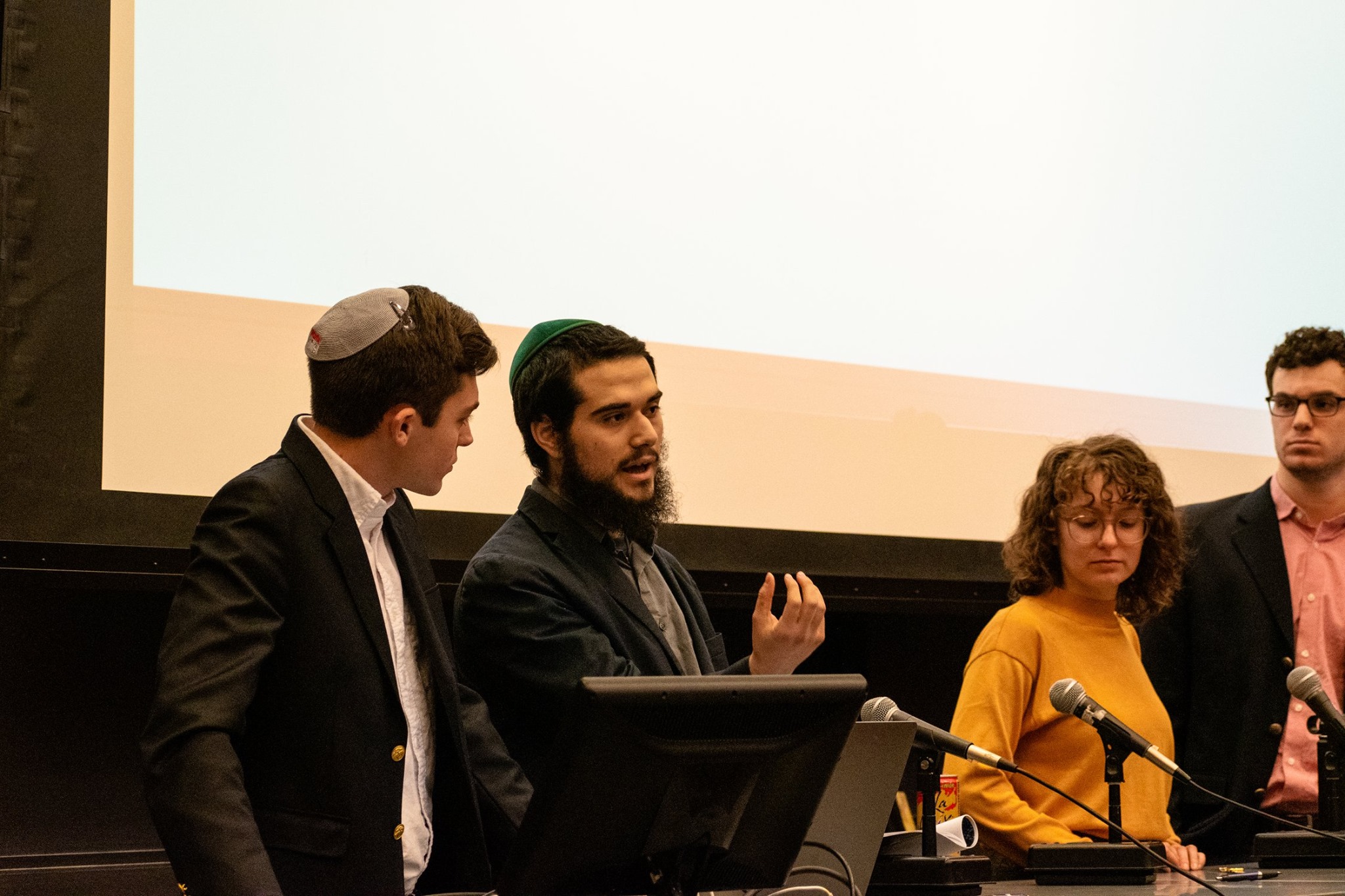
Powered by Hadar and supported by Maimonides Fund, MMCC is the premier program for high school students to engage with modern-day ethical questions using Jewish legal wisdom.
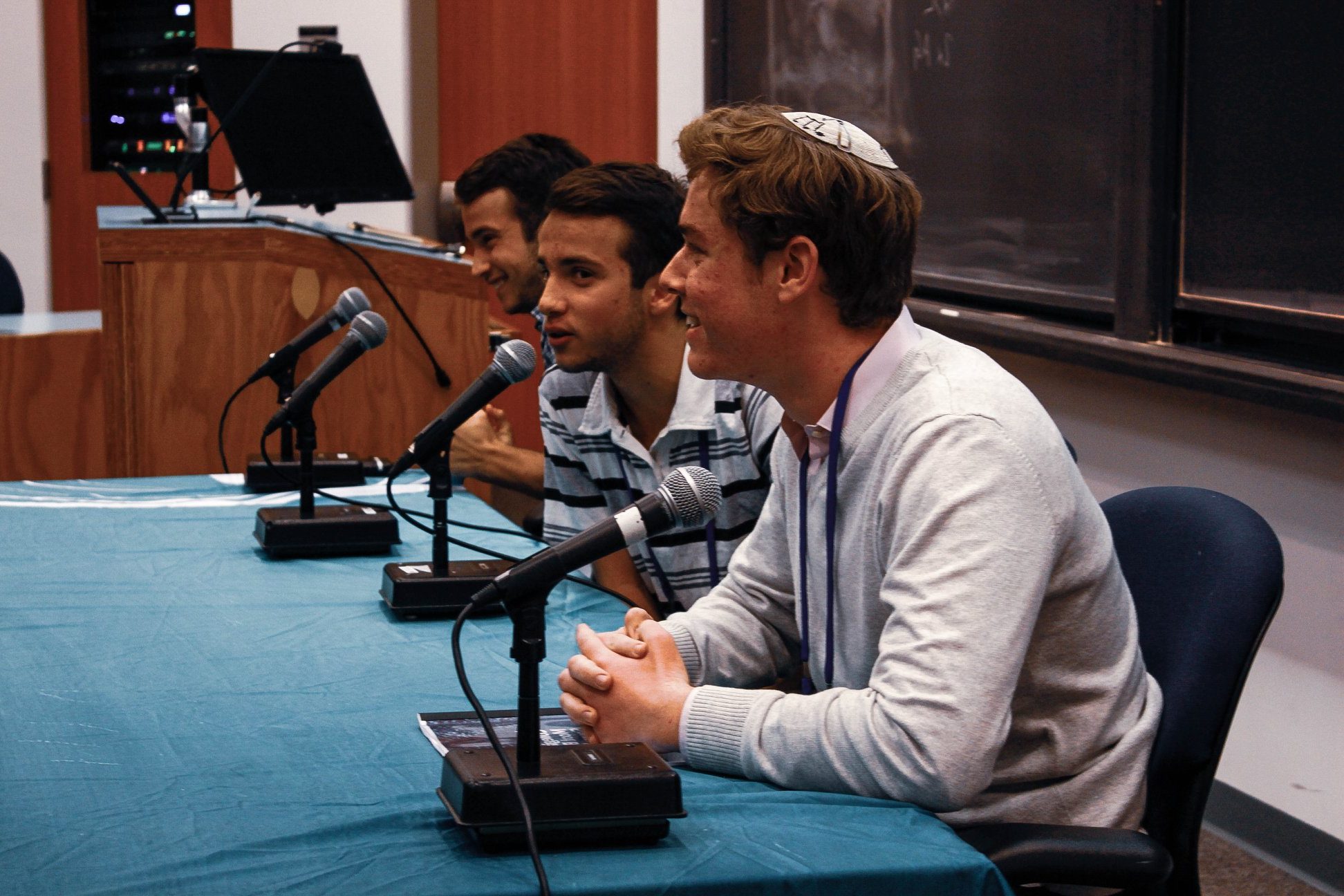
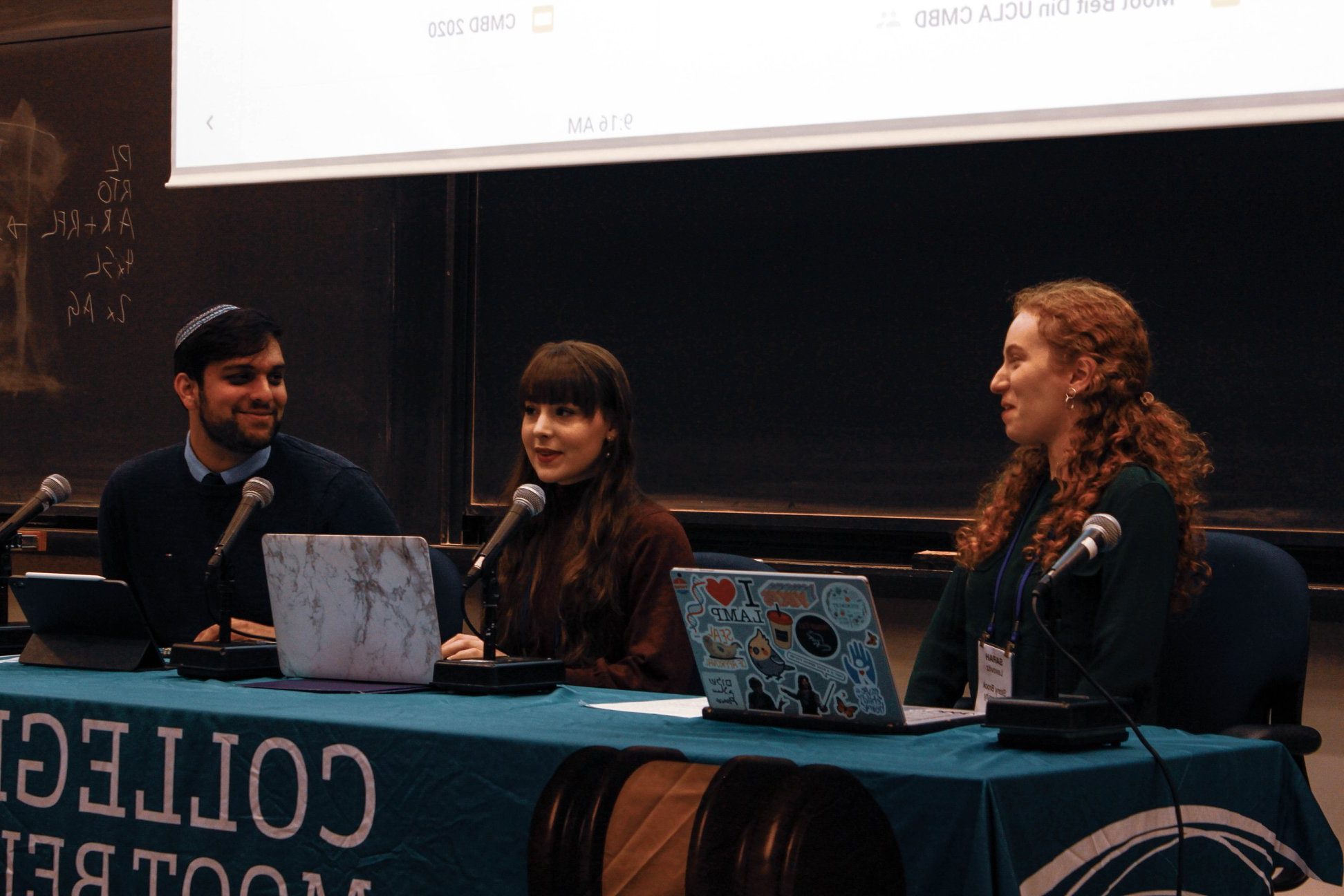
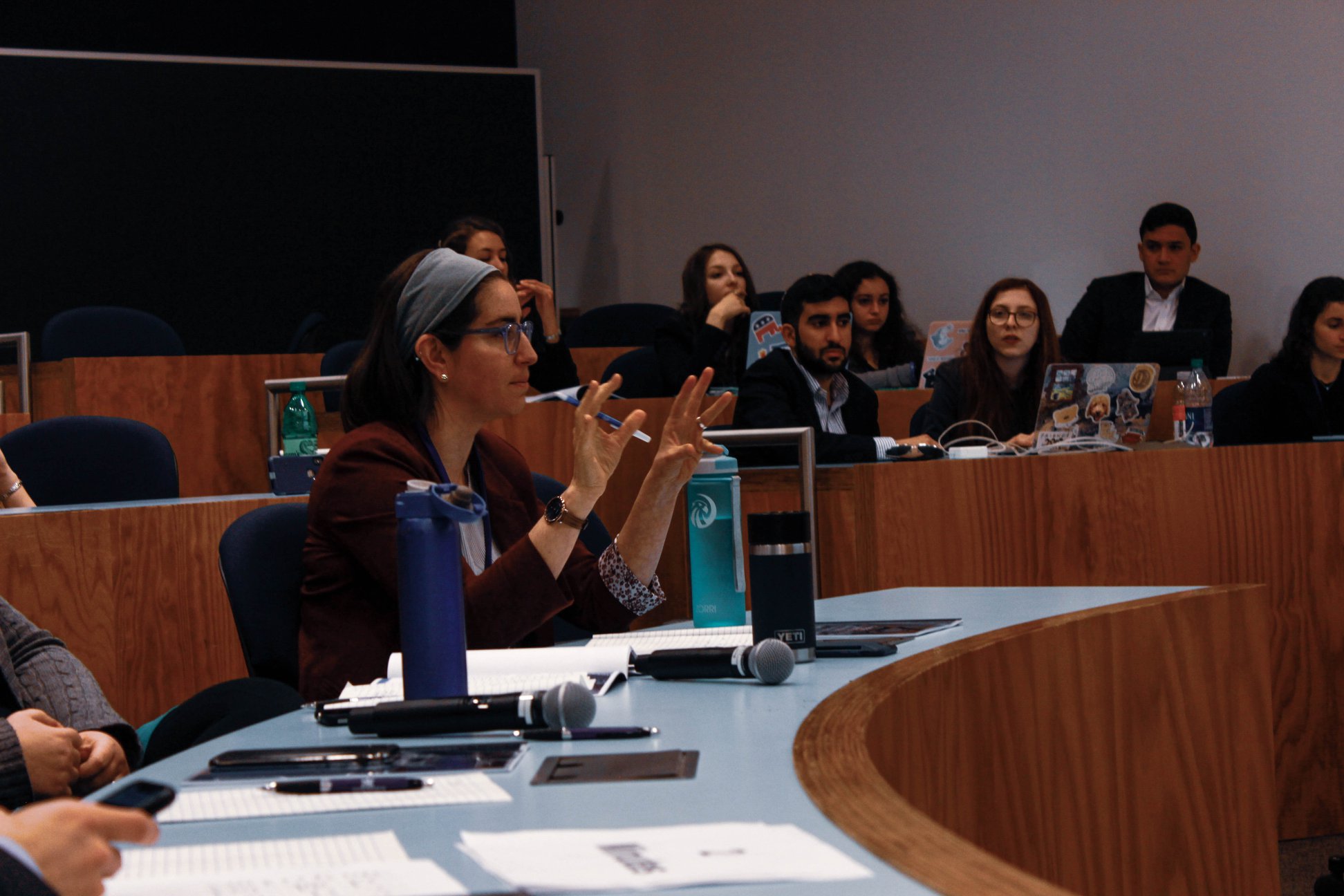
Here’s how it works: Here’s how it works: Each competition centers on a detailed case accompanied by a sourcebook of traditional and modern Jewish texts. In the months leading up to the program, participants study these curated sources to develop arguments that address the questions raised by the case. At the competition, teams present and defend their arguments before a panel of expert judges.
The competition weekend kicks off with a dynamic Shabbaton, drawing a diverse cohort of students from across North America, Israel, and beyond. Students can participate through their school, synagogue, local community cohort, or an online cohort.
If you are interested in learning more about these cohort options, fill out this interest form and we will be in touch with you!
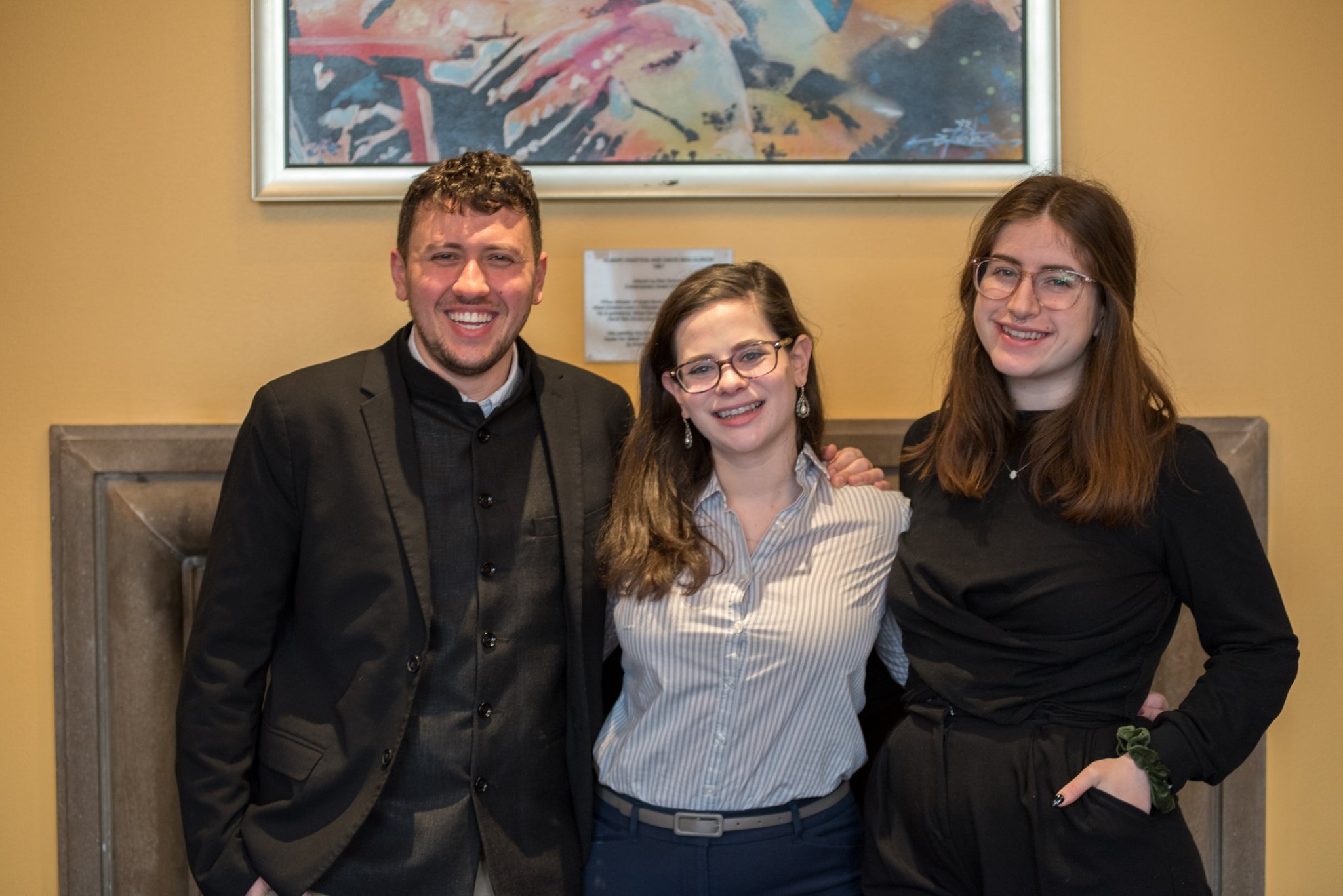
Yitzhak Bronstein is the Director of the Maimonides Moot Court Competition and a member of the Hadar faculty. He is in the inaugural cohort of Rabbanut North America: The Hartman Beit Midrash for New North American Rabbis. Yitzhak has an MA from the University of Chicago Divinity School with a focus on religious ethics and a BA from Yeshiva University in philosophy. He also studied for two years at Yeshivat Har Etzion. Yitzhak lives in Rockville, MD with his wife Catherine.
Dani Carrus is Hadar’s National Program Manager. Prior to joining Hadar, Dani worked at a plethora of Jewish institutions, doing both formal and experiential Jewish education, including seven summers at Ramah New England and nine years teaching General Studies and Judaics at the Maimonides School. She holds both her MA and BA from Brandeis University. Originally from a small town in New Hampshire, Dani now calls the Boston area her home.
Raina Kutliroff is Hadar’s National Program Associate. After obtaining her bachelor’s degree in Education from the University of Illinois at Urbana-Champaign, Raina began her career teaching 6th grade English Language Arts at a public school before transitioning into high school programming at Rochelle Zell Jewish High School. Originally from the Chicago suburban area, Raina now lives in Hoboken, New Jersey.
In preparation for our annual competitions, students are provided a detailed case which engages a contemporary ethical issue. Our sourcebooks contain curated texts spanning the full breadth of Jewish tradition; ancient and medieval texts are juxtaposed with modern perspectives from our present moment. A strong argument will engage these sources and bring them into conversation with each other.

The case this year challenges students to explore a set of complex questions surrounding the legalization and regulation of gambling. On the one hand, this topic has been debated in Jewish texts for many centuries dating back to the Talmud. However, the advent of online gambling—and in particular the legalization of sports betting apps in many locales—has led to a surge in gambling activity and brings a renewed sense of urgency to these questions.

This year’s case challenges students to explore how traditional Jewish laws and ethical teachings on the nature of privacy rights can be applied in the digital age. In particular, participants will determine whether there should be limits
in place regarding the types of data that social media platforms can collect from their users, and for what purposes.

This case explores whether Jewish law recognizes the rights of workers to prevent their jobs from being displaced by AI. In particular, should a city government protect local taxi drivers by banning or regulating a corporation with a self-driving taxi fleet? Or should the lower prices and added convenience of the self-driving fleet be embraced?

Framed around a contested social media page, the case challenges students to explore how Jewish laws around speech and shaming can be applied to a modern context. The case poses the following question: is online shaming permissible for a greater cause?

The 2021 case addresses a crucial question of human rights and criminal justice: what are the rights of an individual who has been convicted of a crime and has served their punishment? Students will evaluate the “Beyond the Box” initiative, which encourages universities not to inquire about the criminal histories of applicants during the admissions process.

A group of student climate activists struggling financially is approached by a donor who allegedly profited from human rights abuses at a detention center for asylum seekers. How should the student activists respond?

The Shabbaton will take place from March 19-22, 2026. The competition will be held on the morning of March 22, 2026.
We design MMCC to be a meaningful and empowering experience for Jewish high school students of all backgrounds.
Yes! Participants are provided a sourcebook with all of the materials needed to compete. All texts are included in their original language alongside an English translation.
Each case challenges students to explore a high stakes ethical question. In recent years our cases have addressed a diverse range of issues including artificial intelligence,social media, criminal justice, and medical ethics.
Our 2025 program included over 300 students from across the United States, Canada, Israel, and Argentina.
Teams are fielded by day schools, synagogues, and other teen organizations. Additionally, individual students may also sign up for the shabbaton and competition by enrolling in our online preparation class.
Yes! There will local cohorts in several cities, in addition to an online prep course that students can sign up for independently. This enables anyone who is interested to study the sources in preparation for the competition and be eligible to attend the shabbaton.
Teams typically have 3-5 students. Organizations are welcome to field multiple teams.
Programming begins on Thursday evening and continues through Sunday afternoon. The first days of the conference are dedicated to community building and educational activities, leading into an inspiring Shabbat. The competition takes place on Sunday morning.
Shabbat is a highlight of the experience! As a pluralistic program, we welcome students from a wide range of backgrounds for an incredible Shabbat spent in community. The schedule includes a wide range of learning sessions, communal singing, electives, multiple options for tefilah (prayer), and many optional activities.
We strongly encourage students to participate in person. If students are unable to attend the competition in person but like to participate in a virtual competition on a different day, please let us know.
The deadline for organizations to register is November 1, 2025. If you are interested in registering after that date, space may be available but is not guaranteed.
Please don’t hesitate to reach out to Yitzhak Bronstein (bronstein@hadar.org) with any questions about participating.


Please don’t hesitate to reach out to Yitzhak Bronstein with any questions about participating.